73 Programming Project Ideas to Inspire and Challenge You
Karan KalraMTS @ CodeCrafters
Sarup BanskotaCodeCrafters CEO
Many developers want to start a side project but aren't sure what to build. The internet is full of ideas that are basic and dull.
Here's our list of 73 project ideas to inspire you. We have chosen projects that teach a lot and are fun to build.
1. Bittorrent Client
Build a BitTorrent client that can download files using the BitTorrent protocol. You can start with single-file torrents. This is a great way to learn how P2P networking works.
Build a program that solves Wordle. This can be a great lesson on information theory and entropy. You'll also get hands-on experience at optimizing computations.
Implement Optimal Transport from scratch to morph one face into another while preserving identity and structure. You'll apply linear programming to a real problem.
Optimal transport · Illustrative point sets
Find the least-cost way to move mass
SourceHalfwayTarget
Each point carries ¼ of the mass.Minimize the sum of squared travel distances.
Create a spreadsheet with support for cell references, simple formulas, and live updates. You'll learn about dependency graphs, parsing, and reactive UI design.
The founder of the GRID spreadsheet engine shares some insights here.
5. Container
Build a lightweight container runtime from scratch without Docker. You'll learn about kernel namespaces, chroot, process isolation, and more.
Build a system that uses Euclid's postulates to derive geometric proofs and visualize the steps. You'll learn symbolic representation, rule systems, logic engines, and proof theory.
Formal proof · Mizar source excerpt
State a theorem. Make each step explicit.
ORDINAL3 · a statement about set inclusion
theorem
succ X c= Y implies X c= Y
proof
X c= succ X byXBOOLE_1:7;
hence thesis;
end;
If the successor of X is a subset of Y, then X is also a subset of Y. The proof cites a previously established inclusion.
Google uses a crawler to navigate web pages and save their contents. By building one, you'll learn how web search works. It's also great practice for system design.
You can make your own list of sites and create a search engine on a topic of your interest.
Build a DNS server that listens for queries, parses packets, resolves domains, and caches results. Learn more about low-level networking, UDP, TCP, and the internet.
Build a game where players connect two actors through shared credits with other actors, and reveal the optimal path at the end. You'll learn how to deal with massive graphs.
thewikigame.com
Illustration · not a game capture
Find the connection.
Go from one article to another using only the links between them.
Explore how to create fast graphs, and then try Landmark Labelling for supreme performance.
10. RAFT
Implement the RAFT protocol from scratch to support distributed computing. Learn consensus, failure recovery, and how to build fault-tolerant distributed systems.
Visit this page for the RAFT paper and other resources.
11. Procedural Crosswords
Design a program from scratch that creates satisfying crosswords with adjustable difficulty. You'll learn procedural generation, constraint propagation, and difficulty modeling.
Shown filled for clarity. A real generator must also handle dead ends and backtrack.
A word square with four valid rows and columns. Constraint propagation narrows the choices.
For example, you can implement the Wave Function Collapse algorithm explained here.
12. Bitcask
Bitcask is an efficient embedded key-value store designed to handle production-grade traffic. Building this will improve your understanding of databases and efficient storage.
Apps like Shazam extract unique features from audio. This fingerprint is then used to match and identify sounds. You'll need to learn hash-based lookups and a bit of signal processing.
Here's a detailed post with everything you need to know.
14. Dangerous Dave
Recreate the industry-changing game using SDL, and add some story elements, NPC interactions, and levels. It'll be a perfect intro to game development.
Implement an algorithm from scratch to compare two text files or programs. This will involve dynamic programming and application of graph traversal.
Here's the classic paper behind Myers' diff, used in Git for years.
16. Visualize object-oriented code
Generate UML class diagrams from source code with support for relationships like inheritance. You'll visualize object-oriented code and learn how to parse with ASTs.
Object-oriented design · Illustrative Java example
Write your own encoder/decoder for the BMP image format and build a tiny viewer for it. You'll learn binary parsing, image encoding, and how to work with pixel buffers and headers.
Build a FUSE filesystem for Linux from scratch, with indexing, file metadata, and caching. You'll have to optimize data structures for storage and performance.
This article talks about the concepts used in filesystems.
19. Quantum Computer Simulation
Write the qubit and quantum gates from scratch. Use them to simulate a circuit for a quantum algorithm like Bernstein-Vazirani or Simon's algorithm.
Quantum simulation · Ideal worked example
One Hadamard gate, two possible outcomes
Prepare |0⟩Initial amplitudes: 1 for |0⟩ and 0 for |1⟩.
Apply HThe Hadamard gate produces an equal superposition.
MeasureRead either 0 or 1 in the computational basis.
H|0⟩ = (|0⟩ + |1⟩) / √2
Probability of 0
50%
Probability of 1
50%
Each probability is the squared magnitude of its amplitude: |1/√2|² = 1/2. These are exact ideal probabilities, not measured hardware results. A finite run need not split evenly.
Write a video player that decodes H.264/H.265 using ffmpeg, and supports casting local files to smart devices. Learn packet buffering, discovery protocols, and stream encoding.
Build a Redis clone from scratch that supports basic commands, RDB persistence, replica sync, streams, and transactions. You'll get to deep dive into systems programming.
Build a client-side video editor that runs in the browser without uploading files to a server. Learn how to work with WASM, and why people love using it for high performance tasks.
Browser video editor · processing diagram
Import locally. Edit locally. Export locally.
01 · InputChoose a file
The user selects a local video. Read its bytes with the browser’s File API.
02 · WorkerProcess with WASM
Trim, join, or transcode the video in the browser. Report progress to the editor.
03 · OutputPreview & download
Create a local object URL for the processed media, then preview or save it.
Reference: ffmpeg.wasm architecture. WebAssembly runs the media-processing code; a browser worker keeps it off the main UI thread.
An example architecture for a browser-based video editor—not a product screenshot. The media can stay on the user’s device.
You have used it in searches and other places where you write text. Implement a solution that suggests the right words, and then optimize heavily for speed.
This YouTube video gives an idea of the implementation process.
25. SQLite
Build a simple SQL engine that reads .db files, uses indexes and executes queries. It's a deep dive into how real-world databases are built and run efficiently.
Remove background sounds from audio files. You'll learn signal processing and denoising techniques used in GPS, mouse input, sensors, object tracking, etc.
Design a file sharing app with sync, cloud storage, and basic p2p features that can scale to some extent. You'll get practice in cloud architecture and backend design.
Build a map engine to index roads, terrain (rivers, mountains), places (shops, landmarks), and areas (cities, states). Learn spatial indexing, range queries, and zoom-level abstractions.
Start by implementing an R-tree from scratch by following the original paper.
Spatial indexing · example point quadtree
Divide the space. Refine the busy regions.
Northwest
A, B Split again
Northeast
C Leaf
Southwest
D Leaf
Southeast
E, F Split again
Illustrative point locations, not geographic data. Here, any region containing more than one point is split into four equal quadrants.
You can use quadtrees instead of R-trees for a simpler implementation.
Recreate a city's road network, simulate traffic using real open data, and design an improved version. Tackle an NP-hard optimization problem with real constraints.
In some cases, nature has long solved what we call hard. Implement SMA or ACO here.
30. Collaborative Editor
Develop a decentralized collaborative text editor. Similar to Google Docs, but without any central server. Use CRDTs to manage concurrent edits and ensure eventual consistency.
Use ropes, gap buffers, or piece tables to build a fast text buffer optimized for efficient editing.
Read this article on designing data structures for such apps.
31. Evolutionary Design
Evolve working models of machinery using only primitive mechanical parts and constraints. You'll learn about genetic algorithms, fitness functions, and physics simulation.
Evolutionary design · A proposed experiment
Change the structure. Keep the test fixed.
ObjectiveUse less material
Minimize total member length at a fixed cross-section, subject to a fixed span, midpoint load, and deflection limit.
This YouTube video shows how interesting evolutionary design can get.
32. Web Server
Create a server from scratch that supports HTTP requests, static files, routing, and reverse proxying. Learn socket programming and how web servers work.
Estimate a depth (disparity) map from a stereo image pair using Markov Random Fields. You'll learn about computer vision, graphical models, and inference techniques.
Build a minimal Git with core features like init, commit, diff, log, and branching. Learn how version control works using content-addressable storage, hashes, and trees.
git log — initial revision
commit e83c5163316f89bfbde7d9ab23ca2e25604af290Author: Linus Torvalds <torvalds@ppc970.osdl.org>
Date: Thu Apr 7 15:13:13 2005 -0700
Initial revision of "git", the information manager from hell
Git’s first commit, by Linus Torvalds on April 7, 2005. Transcribed from git/git.
Build a Unix debugger with stepping, breakpoints, and memory inspection. You'll learn low-level systems programming and process control.
This article discusses the internal structure of GDB.
36. Neural Networks
Build a deep learning framework from scratch with a tensor class, autograd, basic layers, and optimizers. Grasp the internals of backpropagation and gradient descent.
Start by building a simple 3-layer feedforward NN (multilayer perceptron) with your framework.
Andrej Karpathy explains the basic concepts in this YouTube Video.
37. Chess
Build a Chess app from scratch, where users can play against each other or your own UCI engine. This project offers a blend of algorithms, UI, game logic, and AI.
You can go one step further and make the engine play itself to improve like AlphaZero and Leela.
Build a fast search engine from scratch for the Wikipedia dump with typo tolerance and semantic ranking, and fuzzy queries. You'll learn indexing, tokenization, and ranking algorithms.
This article offers a good introduction to the basics of information retrieval.
39. CDN Caching
Build a caching system to avoid redundant fetches for static assets. You'll learn web caching, log analysis, and how to use probabilistic data structures in a real setting.
You can use this dataset containing two month's worth of HTTP requests to the NASA server.
Build a short-video app with infinite scroll, social graphs of friends and subs, and a tailored feed. You'll learn efficient preloading, knowledge graphs, and behavioral signals.
Short-video systems · Illustrative design
Rank the feed. Buffer the next clip.
FollowingFor you
@fieldnotesA walk above the cloudsIllustrative clip · no video
A bounded playback queue
01
NowPlaying · one active decoder
▶
02
NextPreload a limited buffer
↓
03
LaterMetadata only
···
On swipe: release the old clip, promote the next one, refill the queue.
Retrieve candidates↓Rank → queue↻Watch / skip events inform later ranking
Read this article on Monolith, Bytedance's recommendation system.
41. Time Sync Daemon
Implement NTP from scratch to build a background service that syncs system time with time servers. You'll learn daemon design and the internals of network time sync.
Implement HyperLogLog from scratch to provide analytics on number of users engaging with hashtags in real time. You'll learn some key concepts around big data systems.
Write a query planner that rewrites SQL queries for better performance. You'll learn cost estimation, join reordering, and index selection.
Query optimizer — SQL to physical operators
SQL optimizer · Simplified taxi example
Less data between operators
Input · SQL
SELECT z.zone, count(*) AS trips
FROM taxi_data_2019 AS t
JOIN zone_lookups AS z
ON t.pickup_location_id
= z.LocationID
WHERE z.Borough =
'Manhattan'GROUP BY z.zone
ORDER BY trips DESCLIMIT5;
Conceptual execution · top to bottom
Scan tripspickup_location_id
Scan zonesBorough = ‘Manhattan’Filter pushed into scan
Build a file archiver that compresses, bundles, and encrypts your files. Implement compression and encryption algorithms from scratch. Benchmark your performance against zip.
File formats · Simplified layout
Inside a small ZIP archive
Local header → file dataA header identifies the file and its compression method, followed by its stored or compressed bytes.
Repeat for each fileEach file has its own local header and data.
Central directoryLists the entries and points back to their local headers.
End of central directoryRecords the directory location, size, and entry count.
Illustrative layout, not a byte-scale drawing. Optional data descriptors, extra fields, encryption, and ZIP64 records are omitted. No compression ratio is implied.
Build a basic ray tracer to render 3D scenes with spheres, planes, and lights. This will be great practice in writing clean abstractions and optimizing performance-heavy code.
Create your own language. It is best to start with an interpreted language that does not need a complier. Design your own grammar, parser, and an evaluation engine.
Recreate WhatsApp with chats, groups, history, encryption, notifications, and receipts. You'll get practice at building a production-grade app with an API, data store, and security.
Build a service to provide routes for a fleet of vehicles with limited capacity to deliver Amazon packages. You'll learn to optimize routing under constraints.
Vehicle routing · Illustrative coordinates
Six stops. Two vehicles. Five units each.
Route 1 · A (2) → B (1) → C (2)Load 5 / 5 units
Route 2 · D (2) → E (1) → F (2)Load 5 / 5 units
Every stop served once. Routes start and end at the depot. Lines show straight-line travel, not streets.
A feasible, illustrative routing example, not an optimality claim. Capacity constraints.
Build a basic broker to handle topic creation, produce and consume requests. You'll implement concurrency, avoid race conditions, and learn how distributed logs work.
Build an interactive knowledge graph that connects entities across media. Monitor the web for new content to keep it updated. You'll learn graph databases and data handling.
Explore this GitHub repo to learn about knowledge graphs and find some inspiration.
53. Malware
Create a malware and test it against simple firewalls on your VMs. Don't share the code with anyone, though. This project is a solid intro to cybersecurity.
Write your own lock-free data structures using atomic primitives. You'll learn a lot about concurrency, memory management, and atomic operations.
Read about the concept here, and make sure to run a lot of tests like these.
57. Load Balancer
Build a program to distribute requests across backend servers, check health, and support sessions. Learn about socket programming, concurrency, and scalable web infrastructure.
Implement your own version of malloc. Learn how memory allocation works under the hood by working with pointers, heaps, alignment, fragmentation, and system calls.
This tutorial by Marwan Burelle is the perfect place to start.
59. Netflix
Build an app to host and stream 4k videos by writing a streaming protocol from scratch. You'll learn about file storage, video encoding, adaptive streaming, and scalable content delivery.
This YouTube video provides an overview of how it works.
60. Smart Home
Build an app that controls IR appliances and manual switches with device grouping, scheduling, and automation. This project is a mix of embedded systems, app dev, and UI design.
Smart home · Illustrative MQTT architecture
A command has a route back to a device
ControllerPublishes “on” to the example topic home/lamp/set.
MQTT brokerForwards the message to clients subscribed to that topic.
Device adapterTranslates the command into the lamp’s IR or relay control.
State takes the return path. The adapter can publish to home/lamp/state; the controller subscribes through the same broker. Without device feedback, report the commanded state rather than claiming the lamp is physically on.
These topic names are illustrative conventions, not MQTT-defined names. Add authenticated clients, topic permissions, and encrypted connections where appropriate; MQTT alone does not provide safe appliance control.
Build a Continuous Integration system that watches a Git repo, runs tests in isolated environments, and reports results. You'll learn process orchestration and containerization.
Implement a decision tree from scratch and use it to solve a binary classification task with random forest. You'll learn information gain, recursive partitioning, and overfitting.
Build a shell with command parsing, process execution, piping, redirection, and job control. You'll learn a lot about system programming, memory, and operating systems.
Build a node that can download and verify blocks from the Bitcoin network. You'll learn about Merkle trees, transactions, Bitcoin's P2P protocol, and more.
Bitcoin · Illustrative four-transaction tree
Recompute the root, then compare the header
A, B, C, and D stand for transaction IDs, not real chain data. Each parent is SHA256(SHA256(left ∥ right)), using concatenated raw hash bytes. For an odd-sized row, duplicate its last hash before pairing.
Compare the computed root with the block header. A full node must also validate proof of work, transactions, and the other consensus rules; an inclusion proof alone does not establish that a transaction is valid.
A Merkle root commits to a block’s transaction IDs. Matching it is one check, not complete block validation.
You can refer to the Mastering Bitcoin ebook here.
65. Make
Write a simple make tool that reads a Makefile and builds targets. You'll explore some neat concepts around caching, filesystem, version control, and automation.
This paper discusses how it works, and also suggests a non-recursive make.
66. Browser Extension
Build an extension to store passwords, OTPs, page state, scroll, forms, clipboard history, with auto-fill across sessions. You'll learn DOM inspection, secure storage, and sync protocols.
Start with the official Chrome or Mozilla docs on extensions.
67. Stock Trading Bot
Build a bot that uses trading algorithms to simulate or execute trades. Learn to structure event-driven systems, integrate APIs, and automate decisions under constraints.
For example, this paper describes one such algorithm you can implement.
68. Browser Engine
Build a simple browser that parses HTML/CSS to render text and images. You'll learn tokenization, DOM trees, box models, style cascading, and layout algorithms.
Build a background app that uses your phone's GPS, motion, and mic to identify events and store a journal of your life. You'll learn signal processing, sensor APIs, and background tasks.
This article offers a glimpse into the experience of working with sensors.
70. OpenGL
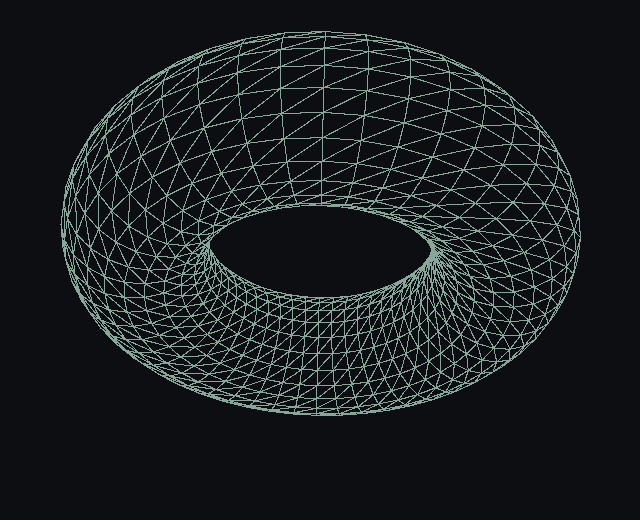
Build a tiny renderer from scratch. This'll make you a better programmer across the board, and it's a must if you're serious about computer graphics.
Software renderer — actual generated output
Same mesh. Two views.2,304 triangles
01 · Triangle mesh
02 · Lambert shading
I = 0.16 + 0.84 max(0, n · l)Perspective projection · depth buffer · flat shadingView the generating code ↗
Build a laser tag system with real-time hit detection, wireless comms between guns, and live sync. You'll learn IR encoding, MQTT protocol, and lockstep/event-driven design.
Build an audio streaming system from scratch that plays music in sync across multiple devices or speakers. You'll learn low-latency transport, clock sync, buffering, and jitter handling.
Build a p2p overlay that routes traffic between peers without a central application server. You'll learn distributed routing, NAT traversal, and encrypted packet forwarding. It still needs underlying network connectivity and may need relays.
Peer networking · Conceptual topology
Direct links where possible, relays where needed
Example route: A → B → C. B forwards packets when A and C cannot establish a direct link. Keep track of reachable peers, avoid routing loops, and handle peers leaving.
This is an overlay topology, not a claim that software removes the need for ISPs or physical connectivity. NAT traversal may need relays; end-to-end encryption must be designed separately.